National open biodiversity data, and the system that holds it together
Open data for people who aren't data scientists: a student, a rural producer, a policymaker. Plus the design system that keeps six or seven portals coherent.
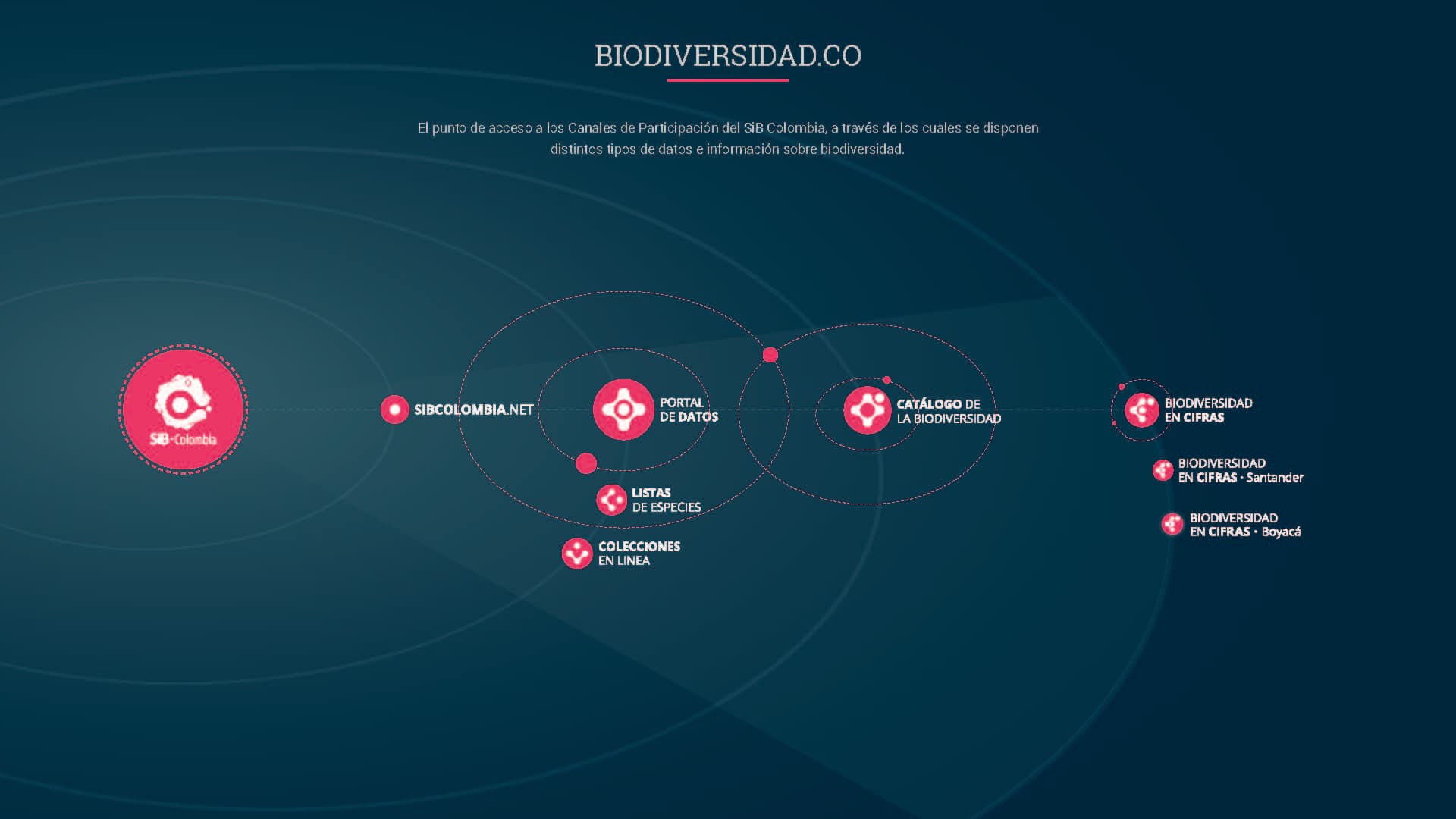
SiB Colombia is the national node of GBIF, and its mandate is open access to biodiversity data. That data is technically rich and useless to most of the people who need it. I led design across a network of interconnected portals built to close that gap, and built the design system that holds them together.
Context
The challenge had three layers: efficient collection and publication pipelines, presenting the resulting data usably, and, where most of the work went, turning that data into something a student, a rural producer or a policymaker could act on without a data-science background. Whatever got built for one region had to scale to all 32 departments of Colombia.
What I did
I interviewed across very different user types to find the real gap: not access to raw data, but the absence of synthesized answers to immediate questions. I ran a deconstructed design sprint with community and state actors at once to reconcile regional needs into one scalable product, shipped Santander first, then Boyacá with usability updates applied back to Santander. A real feedback loop.
The design system underneath
The portals were never meant to be one site. The system had to serve around six or seven of them at once: the main data portal, species lists, collections and the regional sites for Boyacá and Santander. Foundations, component anatomy, colour, tables and filters, built to be extended across the network rather than admired on its own. I also worked hands-on in the React front-end alongside engineering.
Also worth knowing
A note on the evidence
The institutional numbers (100+ organizations, 7M→13M records) are period estimates, kept deliberately separate from the 20/day→5/week query reduction, which is specific to Biodiversidad en Cifras. One product doesn't take credit for an entire institution's growth.
Visuals
Next case study